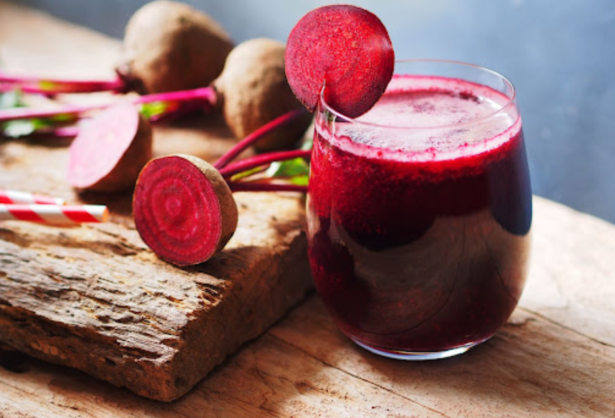
Beetroot juice has a reputation as the purple shot athletes swear by. Cyclists, soccer players, and sprinters have been drinking it for years. But does it work, or is it just a gym-bag ritual? A new systematic review and meta-analysis pooled the best available evidence to find out.
High-intensity interval sprint performance (mostly the Yo-Yo Intermittent Recovery Test)
Mean power output during hard efforts
VO₂max, the ceiling of your aerobic engine
Beetroot juice beat placebo on all three, with effect sizes of 0.38 for sprint performance, 0.43 for mean power, and 0.30 for VO₂max. In statistical terms, these are small to moderate improvements. Just as important, the results were remarkably consistent from study to study. Heterogeneity was low (I² of 0% to 11%), meaning the studies largely agreed with each other instead of pulling in opposite directions. The researchers rated the certainty of evidence as moderate for every outcome.
Why Would a Vegetable Juice Boost Performance?
The key ingredient is dietary nitrate. When you drink beetroot juice, your body converts nitrate into nitrite and then into nitric oxide. Nitric oxide is a signaling molecule that helps widen blood vessels, improving blood flow to working muscles. It’s also thought to make your mitochondria and muscle fibers more efficient, so you need less oxygen to produce the same power.
In practice, that could mean delivering more oxygen where it’s needed, producing force with less energy cost, and delaying fatigue during repeated hard efforts. That makes the findings especially interesting for sports built on repeated sprints and surges, like soccer, basketball, rugby, and hockey.
What the Studies Actually Used
Most trials used a concentrated beetroot shot, and the most common brand was Beet It. Doses typically ranged from about 70 to 140 mL, delivering roughly 6 to 13 mmol of nitrate. Some studies used larger volumes of self-made juice or extracts.
Timing was remarkably consistent: athletes took their final dose 2 to 3 hours before testing. That lines up with the time it takes nitrate to convert into nitric oxide and peak in the bloodstream.
Studies fell into two camps. Acute protocols involved a single dose before testing. Chronic protocols involved loading over days or even weeks, ranging from 2 to 56 days.
Who Benefits Most? Not So Fast
The researchers dug into subgroups, asking whether results differed by athlete level, sport type, dosing strategy, brand, and timing. Some patterns popped up, but they deserve a grain of salt.
For sprint performance, amateurs showed a clear benefit (0.50), while professionals showed a smaller, non-significant one (0.17). For VO₂max, it flipped: professionals showed the significant effect (0.41) and amateurs did not (0.17). For mean power, single acute doses looked better than chronic loading.
The authors are clear about this: none of the tests for differences between subgroups reached statistical significance. Many subgroups contained only one or two studies, and the contradictory patterns suggest much of this is noise. The researchers describe these findings as hypothesis-generating, not conclusions. It would be a mistake to read the data as proving that beet juice works better for weekend warriors than elites, or the reverse.
The Caveats Worth Knowing
The effects are modest. An effect size of 0.3 to 0.4 won’t turn a mid-pack runner into a champion. In competitive settings, though, small edges matter.
Blinding is tricky. Beetroot juice is deep red and distinctively flavored, and placebos can only imitate that so well. If athletes guessed which drink they received, expectation effects could inflate results. The reviewers downgraded the certainty of evidence one level partly for this reason, along with unclear reporting of randomization methods in many studies.
The participants were narrow. Most were young, and the studies didn’t allow analysis by sex or age. How these results apply to older athletes or women isn’t clear from this analysis.
Dose-response is unknown. The review didn’t evaluate how much you need, how long you need to load, or the long-term effects of regular use.
So, Should You Try It?
The evidence says beetroot juice is a reasonable, low-risk ergogenic aid, particularly for high-intensity and repeated-sprint efforts. Few supplements have this many placebo-controlled trials behind them, and fewer still show such consistent results.
If you want to experiment, here’s a practical approach based on how the studies were run:
Start with a standard dose. A concentrated shot of about 70 to 140 mL, providing roughly 6 to 13 mmol of nitrate, matches most of the research.
Time it. Take it 2 to 3 hours before your key session or competition.
Test it in training first. Never debut a new supplement on race day. Some people notice digestive upset, and beet juice can turn urine and stool pink or red, which is harmless but startling.
Judge it fairly. Track a repeatable benchmark, like a sprint set, time trial, or interval session, with and without the juice.
Check with a professional if needed. If you have kidney issues, take blood pressure medication, or have other medical concerns, talk to your doctor first, since nitrate affects blood pressure.
The Bottom Line
Beetroot juice isn’t magic, and this meta-analysis doesn’t pretend it is. But the combined evidence from 33 studies points the same way: a modest, consistent boost to sprint ability, power output, and aerobic capacity, with moderate certainty behind it. For an athlete chasing every legitimate percentage point, a few ounces of purple juice a couple of hours before training may be one of the cheapest experiments you can run.
Source: Cai et al., “Effectiveness of beetroot juice on aerobic and anaerobic exercise performance: systematic review and meta-analysis” (PROSPERO CRD42025636836).
Ryan is a former college wrestler and lifelong fitness fanatic with over 25 years in the industry. He’s run half marathons, tackled mud runs, placed in body transformation contests, and coached everything from wrestling to girls’ soccer.
Along the way, he’s tested hundreds of supplements and built a deep well of supplement knowledge. His work has appeared in Muscle & Strength, Testosterone Junkie, The Sport Review, and more. Today, he’s the editor-in-chief of this site, still training hard and helping others reach their goals. Connect with him on LinkedIn below.